
C’est le grand chamboulement. Un jour vous êtes d’une patience d’ange, le lendemain, votre humeur ressemble à un orage d’été. Entre les nuits hachées et ce jean qui serre un peu trop au niveau de la taille, la périménopause ne fait pas de cadeau. La faute aux hormones (merci la baisse de progestérone et d’œstrogènes) qui chahutent votre métabolisme et boostent l’inflammation.
Mais pas de panique : votre assiette est votre meilleure télécommande pour calmer ces symptômes. Voici les 12 conseils prioritaires pour manger “malin” après 40 ans.
1. Stabiliser le poids et l’énergie
Le premier défi de la périménopause, c’est la gestion du sucre et des muscles. Votre corps devient plus sensible à l’insuline, ce qui favorise le stockage sur le ventre.
- Misez sur les protéines dès le matin : Oubliez la tartine de confiture seule. Œufs, skyr ou poulet au petit-déjeuner stabilisent votre glycémie et protègent votre masse musculaire qui a tendance à fondre (la fameuse sarcopénie).
- Maîtrisez l’index glycémique (IG) : Pour éviter le “ventre de ménopause” et les coups de barre, privilégiez les céréales complètes et les légumineuses. Moins de pics de sucre, c’est moins de stockage de gras.
- Priorisez les fibres (30g par jour) : Les fibres sont vos meilleures alliées pour évacuer les excès d’œstrogènes et nourrir votre microbiote. Un intestin sain, c’est la base d’une humeur stable.
- Pratiquez le “Mindful Eating” : Manger sans écran et en prenant le temps permet de baisser le cortisol (l’hormone du stress) et de mieux ressentir la satiété, souvent brouillée par les hormones.
2. Apaiser l’inflammation et les hormones
Le corps en transition est souvent un corps “enflammé”. Il faut donc lui apporter des ingrédients qui calment le jeu hormonal.
- Adoptez les Oméga-3 : Petits poissons gras, noix et huile de colza sont essentiels pour protéger votre cœur et garder une peau souple malgré la baisse hormonale.
- Soutenez le foie avec les crucifères : Brocolis, choux et kale aident votre foie à recycler les hormones. C’est la solution naturelle contre les seins tendus et les ballonnements.
- Intégrez les phytoestrogènes naturels : Le soja bio ou les graines de lin miment doucement l’action des œstrogènes. Résultat ? Des bouffées de chaleur souvent moins intenses.
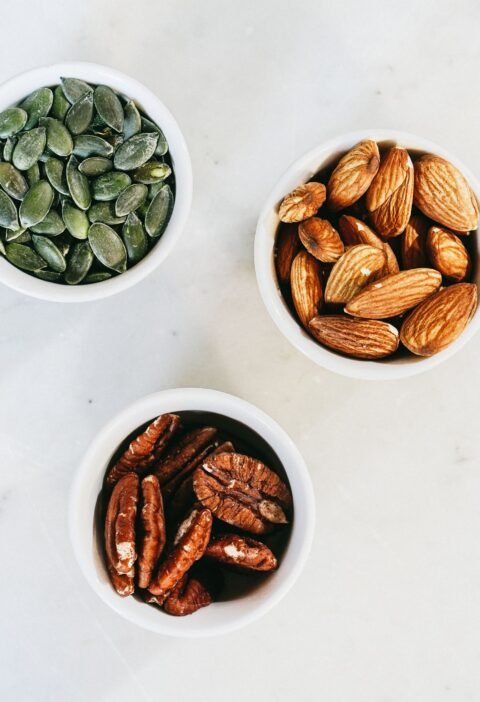
- Ne négligez pas le Magnésium : C’est le minéral de la sérénité. Un carré de chocolat noir (85% min) ou des amandes aident à relaxer vos muscles et à réduire l’irritabilité.
3. Préserver son capital santé et son sommeil
À long terme, il s’agit de protéger vos os et de garantir des nuits réparatrices, souvent mises à mal par les sueurs nocturnes.
- Surveillez le Calcium et la Vitamine D : Vos os ont besoin de ce duo (plus la vitamine K2) pour rester solides. Pensez aux sardines avec arêtes et aux légumes verts.
- Limitez les excitants (Café & Alcool) : Le café peut booster l’anxiété, tandis que le verre de vin du soir est souvent le déclencheur numéro 1 des sueurs nocturnes.
- Réduisez le sel : Pour éviter de vous sentir comme un ballon (la rétention d’eau), limitez le sel caché dans les plats transformés. Vos jambes seront plus légères !
- S’hydrater massivement : 1,5L à 2L d’eau par jour, c’est non négociable. Cela aide à réguler votre température interne et garde votre teint éclatant.
Conclusion
Gérer sa périménopause, ce n’est pas se priver, c’est simplement apprendre à nourrir son “nouveau” corps. En adoptant ces 12 réflexes, vous reprenez le pouvoir sur vos symptômes et votre silhouette. Allez-y étape par étape : Rome ne s’est pas faite en un jour, et votre nouvel équilibre hormonal non plus !
Prête à essayer ? Commencez par intégrer des protéines à votre petit-déjeuner demain matin et observez votre niveau d’énergie à 11h. Vous risquez d’être surprise !
FAQ : Vos questions sur l’alimentation en périménopause
Les graines de lin doivent-elles être moulues ? Oui ! Si vous les consommez entières, elles ressortiront intactes. Pour profiter des bienfaits sur vos hormones, broyez-les juste avant de les saupoudrer sur vos plats.
Pourquoi l’alcool me donne-t-il chaud la nuit ? L’alcool provoque une dilatation des vaisseaux sanguins et perturbe la régulation thermique du cerveau. En périménopause, ce mécanisme est déjà fragile, l’alcool agit donc comme un déclencheur immédiat.
Le soja est-il dangereux pour les hormones ? Consommé sous forme naturelle (tofu, tempeh, edamames) et de manière modérée, il est généralement très bénéfique. Évitez simplement les suppléments ultra-concentrés sans avis médical.
Comment savoir si je manque de Magnésium ? Si vous avez des paupières qui sautent, des crampes nocturnes ou une fatigue nerveuse inexpliquée, il y a de fortes chances qu’une petite cure vous fasse du bien !