Vous tournez, vous virez, vous comptez les moutons, puis vous finissez par fixer le plafond en pensant à la liste de courses du lendemain. Sonne familièrement ? Vous n’êtes ni folle, ni seule. Bienvenue dans le club très sélect (et très fatigué) des femmes en périménopause. Elle chamboule tout, y compris votre sommeil.
Entre les sueurs nocturnes qui transforment votre lit en piscine et le cerveau qui décide de lancer un débat philosophique à 3h du matin, dormir devient un véritable défi. Mais rassurez-vous : ce n’est pas “dans votre tête”, c’est dans vos hormones. Mais avant de vous résigner aux nuits blanches, regardez de plus près le contenu de votre assiette. L’alimentation est une arme redoutable pour retrouver des nuits paisibles. On vous explique comment ça marche.
1. Le chaos hormonal : Les coupables de vos nuits blanches
Pourquoi tout bascule maintenant ? La faute revient à un duo bien connu : les œstrogènes et la progestérone.
La chute de la progestérone
La progestérone est l’hormone “zen”. Elle a un effet anxiolytique naturel qui aide à l’endormissement. En périménopause, son taux chute souvent en premier, laissant la porte grande ouverte à l’anxiété et aux réveils précoces.
Pour couronner le tout, la production de mélatonine — l’hormone du sommeil — diminue naturellement avec l’âge (Chronobiology in Medicine, 2024). Résultat : un endormissement difficile, un sommeil fragmenté et des réveils précoces. Votre horloge biologique a simplement besoin d’un nouveau réglage.
Les montagnes russes des œstrogènes
Les œstrogènes, eux, régulent la température de votre corps. Quand ils baissent, votre thermostat interne se dérègle. Résultat : vous avez soudainement l’impression d’être dans un sauna à minuit. Ces bouffées de chaleur nocturnes fragmentent votre sommeil et empêchent d’atteindre les cycles profonds et récupérateurs (MDPI, 2025).
2. L’assiette “Dodo” : Ce qu’il faut manger (ou pas) le soir
Puisque nous sommes chez MyMenoChef, parlons cuisine ! Ce que vous mettez dans votre assiette au dîner influence directement la qualité de votre nuit.
Le tryptophane
Pour fabriquer de la mélatonine, votre cerveau a absolument besoin d’un acide aminé essentiel : le tryptophane. Comme votre corps ne sait pas le fabriquer, vous devez le manger. Vous le trouverez en quantité dans la volaille, les œufs, les légumineuses (lentilles, pois chiches) et le tofu (Sleep Foundation, 2025). Une astuce de chef : associez ces aliments à des glucides complexes (comme l’avoine ou le riz complet) pour aider le tryptophane à atteindre votre cerveau.
Le magnésium, votre meilleur ami
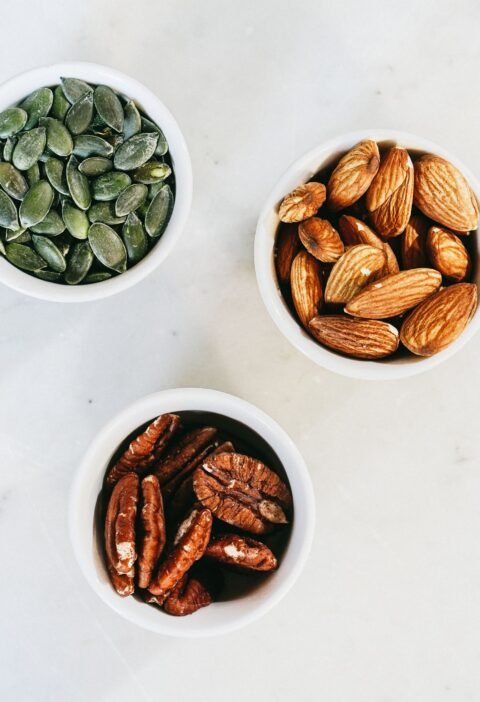
Misez aussi sur le magnésium, le minéral anti-stress par excellence. Il détend les muscles et calme le système nerveux. Mettez dans votre panier des légumes feuilles vert foncé (épinards), des amandes et une touche de chocolat noir à 70 % (Frontiers in Nutrition, 2025). Enfin, le jus de cerise griotte est une source naturelle rare de mélatonine, prouvée pour allonger la durée de vos nuits (PMC, 2024). Une carence en magnésium est très fréquente à cette période et accentue les troubles du sommeil.
Attention aux faux amis
Le verre de vin pour “s’assommer” ? Mauvaise idée. L’alcool perturbe la régulation thermique et aggrave les sueurs nocturnes. Idem pour les repas trop épicés ou trop lourds qui augmentent la température corporelle. Privilégiez des glucides complexes (quinoa, patate douce) qui favorisent la production de sérotonine, l’hormone du bien-être.
🍽️ La Chrono-Nutrition du Sommeil
Pour que ces nutriments agissent au bon moment, voici comment organiser vos repas de la journée :
- Au petit-déjeuner : Cap sur la tyrosine pour faire le plein d’énergie. Misez sur les protéines et les bons gras (œufs, avocat, fromage de chèvre, oléagineux) pour stabiliser votre glycémie dès le matin.
- Au déjeuner : Un repas équilibré avec des protéines (poisson ou poulet), des légumes de saison et des glucides à index glycémique bas (quinoa, lentilles). Cela évite le coup de barre de 14h.
- Au goûter (Le secret du soir) : C’est le moment idéal pour amorcer la production de mélatonine ! Prenez une poignée d’amandes ou de noix de cajou avec un fruit (banane ou kiwi) et un carré de chocolat noir.
- Au dîner : Mangez léger mais rassasiant. Privilégiez les glucides complexes (patate douce, riz complet) qui aident à l’endormissement, associés à une petite portion de protéines faciles à digérer (poisson blanc, tofu) et des légumes cuits.
3. Créer un sanctuaire : La routine anti-insomnie
Pour que la magie opère, il faut aussi éliminer les saboteurs de sommeil. Le premier réflexe est de fuir les sucres raffinés le soir. Un pic de sucre provoque une hypoglycémie réactionnelle en milieu de nuit, ce qui réveille le corps en sursaut avec un pic de cortisol (l’hormone du stress).
Puisque votre corps est en plein chantier, l’environnement de votre chambre doit être impeccable. Voici quelques ajustements simples pour hacker votre nuit.
La règle du frais
Votre corps a besoin de baisser sa température pour s’endormir. Gardez votre chambre entre 17 et 19°C. Investissez dans des draps en matières naturelles (coton, lin, bambou) qui respirent mieux que le synthétique.
Le couvre-feu digital
La lumière bleue des écrans bloque la mélatonine, l’hormone du sommeil. Essayez de couper le téléphone une heure avant de dormir. Remplacez-le par un livre, une séance de respiration de cohérence cardiaque ou un podcast relaxant. L’objectif est d’envoyer un signal clair à votre cerveau : “La journée est finie, on débranche”.
En dehors de l’assiette, d’autres solutions comportementales ont fait leurs preuves :
- La phytothérapie : La racine de valériane, la passiflore et la sauge aident à réduire l’anxiété et l’intensité des sueurs nocturnes.
- Les bains aux sels d’Epsom : Un bain chaud avant de dormir permet une absorption cutanée de magnésium pour détendre les muscles.
- La thérapie comportementale (CBT-I) : C’est la méthode de référence pour reprogrammer le cerveau des insomniaques sans médicaments.
- Le mouvement doux : Une séance de yoga ou une marche rapide en journée réduit le stress et appelle un sommeil réparateur.
Conclusion
Le manque de sommeil en périménopause n’est pas une fatalité, c’est une phase de transition qui demande un peu de stratégie. En comprenant l’impact de vos hormones, en ajustant votre alimentation et en soignant votre environnement, vous pouvez reprendre le contrôle sur vos nuits. Soyez indulgente avec vous-même : chaque petit changement compte !
Prête à tester une recette spéciale “nuit paisible” ? Découvrez nos menus riches en tryptophane et magnésium sur MyMenoChef pour nourrir votre sommeil autant que votre corps !
FAQ : Vos questions sur le sommeil
Est-ce que je peux prendre de la mélatonine ? La mélatonine peut aider ponctuellement pour l’endormissement, mais parlez-en à votre médecin, car elle ne règle pas forcément le problème de fond des bouffées de chaleur.
Pourquoi je me réveille toujours à 4h du matin ? C’est souvent lié à un pic de cortisol (l’hormone du stress) ou à une baisse de glycémie. Un petit en-cas protéiné avant de dormir peut parfois aider à stabiliser tout ça.
Le sport le soir est-il déconseillé ? Oui, s’il est intense. Le sport augmente la température du corps. Préférez le yoga, le stretching ou une marche tranquille après 19h.
Les plantes peuvent-elles aider ? Absolument. La valériane, la passiflore ou l’escholtzia (pavot de Californie) sont d’excellentes alliées naturelles pour apaiser l’agitation mentale avant la nuit.
Quels fruits manger le soir pour favoriser le sommeil ? La banane est idéale car elle contient du tryptophane, du magnésium et du potassium. Les kiwis et les cerises griottes sont aussi d’excellents choix validés par les études pour leur richesse en antioxydants et précurseurs de mélatonine.
Le café du matin peut-il gâcher ma nuit en périménopause ? Généralement non, mais attention à votre sensibilité. Durant la périménopause, le corps élimine moins vite la caféine. Pour ne prendre aucun risque, fixez une heure limite à 14h pour votre dernière tasse de café ou de thé.
Le sucre le soir fait-il vraiment sauter les nuits ? Oui. Les aliments à index glycémique élevé provoquent des montagnes russes d’insuline. Quand votre taux de sucre chute brutalement vers 3h du matin, votre corps sécrète de l’adrénaline et du cortisol pour compenser, ce qui vous réveille instantanément.