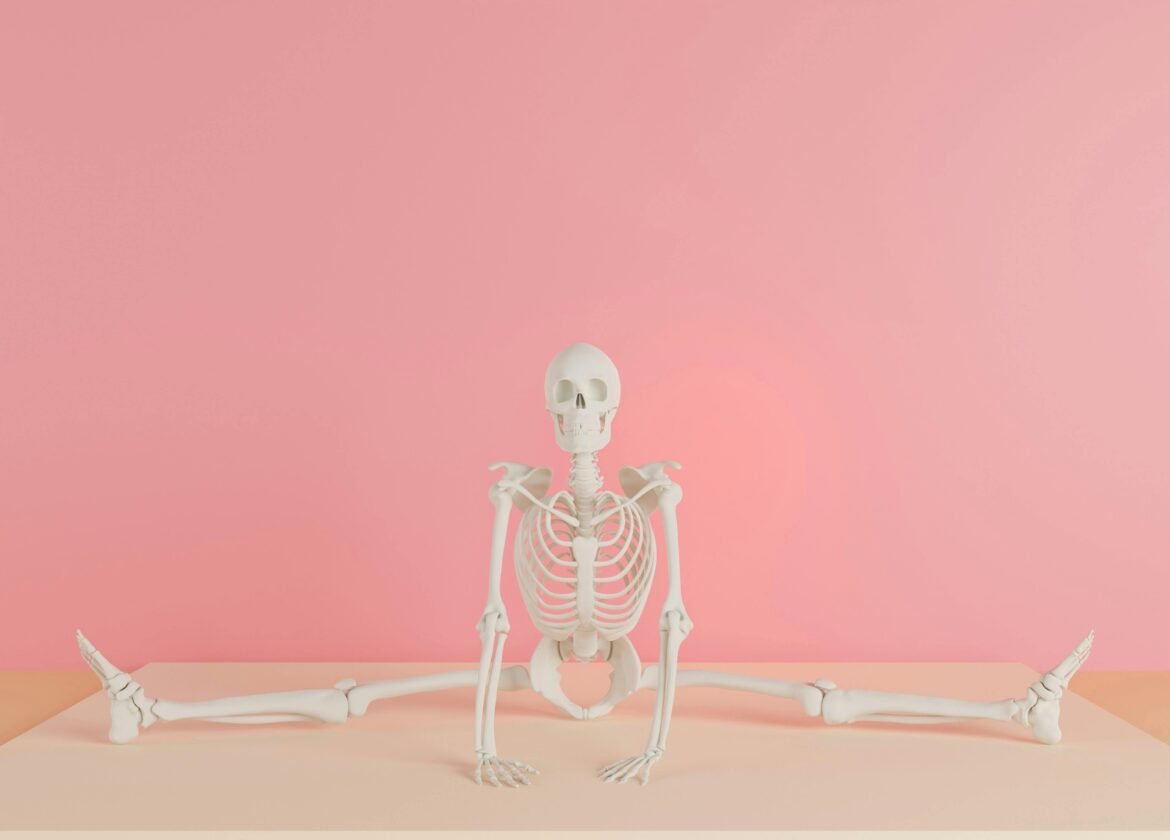
Vous avez l’impression que vos genoux font de la percussion à chaque fois que vous montez l’escalier ? Ou que vos doigts sont un peu plus “rouillés” au réveil ? Ce n’est pas le fruit de votre imagination, et non, vous n’êtes pas devenue “vieille” du jour au lendemain. C’est simplement le signe que vos hormones font le ménage, et vos os ainsi que vos articulations en ressentent les secousses. La bonne nouvelle ? Votre cuisine est votre meilleure pharmacie. On vous explique comment lubrifier tout ça et garder une charpente en béton.
1. Pourquoi tout semble grincer d’un coup ?
Le coupable est souvent le même : la chute des œstrogènes. Ces hormones ne servent pas qu’à la reproduction ; ce sont de véritables gardiennes de votre structure.
Le rôle protecteur de l’œstrogène
L’œstrogène agit comme un bouclier pour vos os en régulant le renouvellement osseux. Quand son taux baisse, l’os se détruit un peu plus vite qu’il ne se reconstruit. C’est là que le risque d’ostéoporose pointe le bout de son nez. Les œstrogènes freinent naturellement les ostéoclastes (les cellules qui détruisent l’os) et stimulent les ostéoblastes (celles qui le fabriquent). Quand les hormones chutent, le rythme de destruction l’emporte, entraînant une perte de densité osseuse (Nature Reviews Endocrinology, 2013).
Des articulations moins souples
Du côté des articulations, les œstrogènes ont un rôle anti-inflammatoire puissant et maintiennent l’hydratation des tissus et du cartilage. Moins d’œstrogènes signifie moins de “lubrifiant” naturel, un cartilage moins souple, plus sensible aux frottements, et une inflammation qui s’installe plus facilement, provoquant ces fameuses raideurs matinales et douleurs articulaires (International Journal of Molecular Sciences, 2022).
2. L’assiette “Anti-Rouille” : Vos alliés nutritionnels
Pour contrer ces changements, il ne suffit pas de boire un verre de lait. Il faut une stratégie globale pour nourrir vos tissus en profondeur.
Le trio de choc : Calcium, Vitamine D et K2
- Le calcium et la vitamine D3 : Le calcium est la brique de vos os, mais sans vitamine D3, il n’est pas absorbé par l’intestin.
- La vitamine K2 et le magnésium : C’est le duo stratégique trop souvent oublié. Le magnésium active la vitamine D, et la vitamine K2 active une protéine (l’ostéocalcine) qui dirige le calcium directement dans l’os, évitant qu’il n’aille boucher vos artères (Nutrients, 2024).
Le calcium est la brique de vos os, mais sans la vitamine D (l’architecte) et la vitamine K2 (le livreur), il ne sait pas où aller.
- Où les trouver ? Pensez aux sardines avec les arêtes, au chou frisé, aux amandes et aux produits laitiers de qualité. Pour la vitamine D, une exposition au soleil est top, mais une supplémentation est souvent nécessaire.
Le pouvoir du collagène et de la Vitamine C
Le collagène est la colle qui maintient vos articulations. Pour aider votre corps à en fabriquer, misez sur la vitamine C (agrumes, poivrons, kiwis) et des “bouillons d’os” faits maison, riches en acides aminés essentiels.
Zoom sur les Oméga-3
Ces bons gras sont de puissants anti-inflammatoires. En consommant des poissons gras (maquereaux, anchois) ou des graines de lin, vous aidez à “éteindre le feu” de l’inflammation articulaire.
💡 Vos super-aliments pour les os & articulations
Pour intégrer ces nutriments sans vous prendre la tête, voici le guide des aliments ciblés à intégrer au fil de votre journée :
| Repas | Aliments cibles | Bienfaits précis |
|---|---|---|
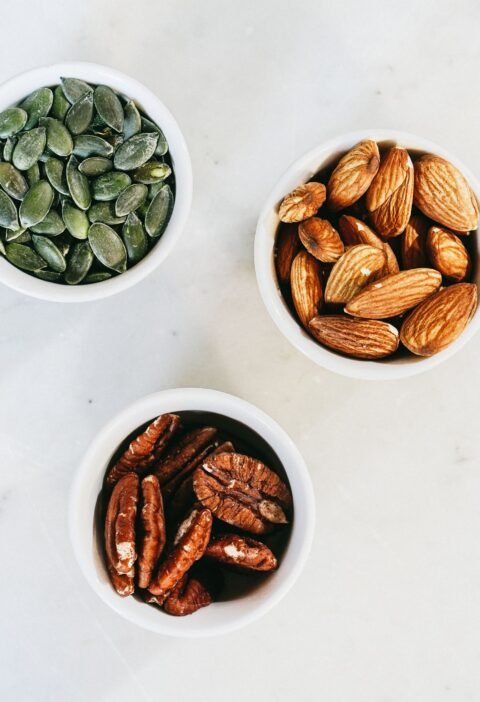
| Petit-déjeuner | Graines de chia ou de lin moulues (dans un yaourt végétal ou un porridge), amandes. | Riches en calcium végétal, en magnésium et en oméga-3 anti-inflammatoires. |
| Déjeuner | Poissons gras (sardines avec les arêtes, maquereaux) + légumes verts (brocoli, chou kalé). | La sardine apporte du collagène, du calcium et de la vitamine D3. Les choux fournissent de la vitamine K et du calcium hautement assimilable. |
| Collation | Une poignée de noix ou 2 carrés de chocolat noir (minimum 85%). | Boost de magnésium pour fixer le calcium et apaiser le système nerveux. |
| Dîner | Tofu ferme ou protéines de soja, arrosés d’huile de colza, accompagnés d’une poêlée de légumes colorés. | Les isoflavones du soja miment discrètement les œstrogènes pour freiner la dégradation de l’os. |
3. Bouger pour solidifier (sans tout casser)
L’alimentation fait des miracles, mais elle travaille encore mieux en équipe. Pour maximiser vos chances de faire disparaître les douleurs, voici trois autres leviers indispensables :
- Le renforcement musculaire (la musculation ou le Pilates) : Vos os ont besoin de contrainte mécanique pour rester denses. Soulever des poids (même légers) ou travailler au poids du corps stimule la création de matière osseuse. Le mouvement produit aussi du liquide synovial, le lubrifiant naturel de vos articulations.
- La loi de la gravité: Les activités à impact modéré, comme la marche active ou la danse, stimulent la création de nouvelles cellules osseuses. Si vous ne mettez aucun poids sur vos os, votre corps se dit qu’ils ne sont plus utiles et les fragilise.
- La phytothérapie et la supplémentation : Des plantes comme le curcuma (puissant anti-inflammatoire) ou l’extraits de membrane d’œuf (riche en collagène) soulagent nettement les douleurs. Une supplémentation en vitamine D3 + K2 est souvent indispensable en hiver.
- La gestion du stress et du sommeil : Le cortisol (l’hormone du stress) est très acide pour le corps et accélère la fuite du calcium dans les urines. Dormir suffisamment permet à vos tissus de se réparer.
Conclusion : On passe à l’action !
Vieillir ne signifie pas forcément souffrir. En adaptant votre nutrition et en restant active, vous pouvez traverser la périménopause avec des os solides et des articulations souples. Votre corps change, changez de stratégie avec lui !
Votre défi de la semaine : Ajoutez une portion de légumes verts (brocoli, épinards ou chou) et une source d’Oméga-3 à votre prochain dîner. Vos genoux et vois hanches vous diront merci !
FAQ : Vos questions fréquentes
Est-ce que je dois prendre des suppléments de calcium ? Pas forcément. Un excès de calcium en complément peut être contre-productif. Privilégiez toujours l’alimentation et demandez un bilan sanguin à votre médecin pour vérifier vos besoins réels.
Le yoga est-il bon pour les os ? Oui ! Le yoga travaille l’équilibre (pour éviter les chutes) et crée une tension musculaire saine qui aide à maintenir la densité osseuse. C’est excellent pour la souplesse articulaire.
Le café est-il mauvais pour les os ? En excès, oui. La caféine peut limiter l’absorption du calcium. Limitez-vous à 2 ou 3 tasses par jour et assurez-vous d’avoir des apports suffisants en minéraux par ailleurs.
Pourquoi ai-je mal aux articulations surtout le matin ? C’est souvent lié à l’inflammation et à la baisse d’hydratation des tissus pendant la nuit. Une hydratation régulière et des étirements doux au réveil peuvent grandement aider.
Est-ce que je dois supprimer les produits laitiers pour mes articulations ? Pas forcément, sauf si vous y êtes intolérante. Cependant, le lait de vache peut être pro-inflammatoire chez certaines femmes. Privilégiez les petits laitages de chèvre ou de brebis, ou tournez-vous vers des sources végétales d’excellence comme les amandes, le tahini (crème de sésame) et les légumes de la famille des choux.
Combien de temps faut-il pour voir une amélioration sur les douleurs ? Pour les douleurs articulaires liées à l’inflammation, les changements alimentaires (notamment l’apport en Oméga-3 et la baisse du sucre) peuvent apporter un soulagement en 3 à 4 semaines. Pour la densité osseuse, c’est un travail de fond : les bénéfices se mesurent plutôt sur plusieurs mois à l’aide d’une ostéodensitométrie.
Le collagène en poudre est-il utile en périménopause ? Oui, c’est un excellent coup de pouce. À partir de 40 ans, notre production de collagène chute drastiquement. Une cure de collagène hydrolysé (idéalement marin ou bovin de type I ou II) pendant 3 mois aide à régénérer le cartilage articulaire et améliore aussi l’élasticité de la peau.